Search This Blog

Tuesday, November 30, 2010

Farm der Tiere u. Tierisch gut


Trying to get some more exciting posts up here...the thing perhaps, is that I feel my social life is not spectacularly interesting...

This takes me back to about two weeks ago. The students in the 3rd form recently read Animal Farm and the play came to Amstetten - which means I got to see it!

I forgot how much I completely LOVE Animal Farm, seeing as I haven't read it since high school. But it is still one of my favorites. It's more...what shall I say? Satirical than 1984. I mean, it's less hit-you-over-the-head with doom and gloom and the destruction of modern civilization, etc. And plus, animals improve everything.


The acting troupe that put on Farm der Tiere was from Salzburg. And I must commend them on their great show: three actors, no set, no costumes - except that the three of them were each wearing white painters' pants and used the occasional prop to signify a character change - for example, Napoleon had sunglasses, Boxer had rolled-up sleeves, etc. There was a lot of physical humor, and some crudeness (like, one of the actors grabbed his crotch at one point...)  but, hey. They're playing animals. What do you want?


And then, later that week, I was invited to Klaus and Ilsa's choral concert. I went with one of the English teachers, Gabi, her friend, and her friend's parents. The audience was (unsurprisingly) mostly older people. And, now that they know I also sing, they're trying to get me to join the church choir. Well...they suggested I go to the practices. Which I am planning to do, as soon as I figure out when they practice. It's just a little confusing.

The concert was titled "Tierisch Gut" which referred to the choice of songs. All of them were about animals, with poems or stories about animals in between the songs. Many of the pieces were baroque, and performed a cappella. Very interesting.

One of the poems selected was...mildly amusing. About the love life of a wild boar named Horst. Who falls in love with another pig named Vanessa. And takes her out for a movie and ice cream. My one concern is this: who would name a pig Vanessa? Pigs should be named things like Tinkerbell. Or Roxy. Or not named at all if they are destined to be eaten. But then again, once named, a pig has a certain power over its captors - think Wilbur in Charlotte's Web or Babe. 


And, well, I felt vindicated when Gabi leaned over and whispered to me, "Vanessa? Would it have killed them to change the name?"


Saturday, November 27, 2010

That Summer in Paris

Here is a testament to my lack of focus...


I recently finished (by recently, I mean yesterday) a book I bought in Montreal at a used bookshop, The Word. It came highly recommended in Lonely Planet, but was unfortunately disappointing when we got inside. But that is beside the point. The point is, I started it in Montreal and lugged it around since, to finish it...yesterday. In Austria.

The title, as you may have guessed, is That Summer in Paris, written by Morley Callaghan (who? Yes, I'm getting to that). Famous in his own right in the 1920s and 1930s, Morley Callaghan was a Canadian writer who grew up in Montreal and ended up hightailing it to Paris with the best of them in the 20s and became part of the ex-pat community, including Gertrude Stein, James Joyce, F. Scott Fitzgerald and Ernest Hemingway - and the less well-known of them: Robert McAlmon, Sherwood Anderson, etc.  

Furthermore, I have a thing about ex-pat writers in general, and a really big thing about the Summer of '29 - and most things Hemingway. I read a now out-of-print collection of short stories, Men without Women while I was living in Paris in the summer of 2008, finishing out an internship. The book had been left in the apartment I was renting, and, seeing as I had an hour commute every day to get from one side of the city to the other, I ended up reading a lot that summer - a book a week, at least. I now regret not stealing the book from the apartment, considering it has been out of print for several years and I am unlikely to ever find it the way I read it. However, I hope the current inhabitant of my former apartment in enjoying it as much as I did.

Unfortunately for poor Morley, he wasn't very popular outside of Canada, except for a few short stories. I had never heard of the guy, to be honest, and what drew me to the book was the fact that Hemingway and Fitzgerald were both on the cover (a first edition - 1963, which would be worth something if a) Morley Callaghan were actually famous and b) it were not a paperback). 

Callaghan seems to think, however, that he was the inspiration for one or other character in The Sun Also Rises and suffers under the expectation of greatness - don't we all, though? I was originally enraptured by his name-dropping, which, by the end became tedious:

"One September afternoon in 1960 I was having a drink with an old newspaper friend, Ken Johnstone,   when unexpectedly he told me he had a message to pass on from Ronnie Jacques, the well-know New   York photographer. Jacques had been in Sun Valley taking some pictures of Hemingway, and they had gotten to talking about me." 

No doubt, Morley. Surely his ears were always burning.

The central theme of That Summer in Paris is this boxing match between Callaghan and Hemingway during that summer, where Callaghan knocked the $#^& out of Hemingway while Fitzgerald kept time (poorly), against which Hemingway took personal grievance - his relationship with Fitzgerald was never good to begin with - and is coincidentally (or not) mentioned both on the first page and used as the climax of the story arch. Why? This was obviously the highlight of Morley Callaghan's life, and he didn't have much else to write about. Certainly it could not have been because the scene was so intensely interesting. 

I continued reading, despite flat prose and excruciating ego because I decided I might as well, having bought the book. And the funny thing is, I have a character who is Morley Callaghan - I just didn't know it until I read That Summer in Paris and could compare my ideas on the aspiring (but ultimately doomed) writer and his real-life counterpart (poor baby - would have ended up teaching in a community college were it not for Hemingway) which I hope will prove fruitful. Otherwise, I wasted $6.50 CAD and almost 3 months...


Tuesday, November 23, 2010

NATIONALFEIERTAG


I forgot: when I went to the Frida Kahlo exhibit, it was the weekend-ish (OK. Monday and Tuesday) of Austria's national holiday (October 26). I went to the little celebration in front of the Parliament building. They had lots of tanks and army stuff...go figure.


From l. to r. Nico, Jake, Katy, Matt


Monday, November 22, 2010

Bank Austria Does Frida Kahlo

Several weeks ago...before I even went to Prague...I went to the Frida Kahlo exhibit at the Kunstforum in Vienna.

I greatly enjoy Frida Kahlo, as a woman and an artist. Unquestionably, she had genius qualities. I was very impressed by the whole collection, and found out a lot about Frida - I mean, more than I learned from the Salma Hayek movie. Although Salma was great - very artistically driven and all, but I could not help feeling it was a bit...one-sided?

Like, for example, why the heck did Frida do so many self-portraits? What is the art historian's perspective on this? Something like, art reflects life, life is fragile and subjective and the duty of the artist is to find the greatest artistic expression in some sort of muse...subject...whatever.

My uncultured perspective is that she is a self-important brat who thinks the greatest artistic expression is found in herself. Why go any farther in seeking truth and beauty when the mirror is only steps away? And just as good (i.e. better) than the "traditional" muse.

And, yeah she had a crappy life...like sustaining major injuries in a bus accident when she was 18 (and being plagued by these same injuries for the rest of her life), marrying a man 20 years her senior who was unfaithful to her, and putting her faith in Communism...which may or may not have been a disappointment for her (I have no way of knowing, but considering how faith in Communism normally works out for people...)

But think of all of the positive things that happened to her! She became famous and successful within her lifetime, which is incredibly difficult for any (serious) artist. She is still regarded as one of the leading (and few female) surrealist painters, and even though her husband had lots of affairs and hurt her, she had plenty of affairs herself - with some pretty heavy-duty characters! Which, of course, is not cool. That's nothing I condone. But, still...when you got it...?

This makes me wonder, when good things happen to you, must they be regulated by bad things happening as well? Are any of us free to live our lives, or is there a greater force beyond what we know? Frida would certainly not believe in a higher force...or any higher power at all, if she was a true Trotskyist (maybe she just slept with him without seriously considering his ideas...) but perhaps this would have helped her frame of mind.

Saturday, November 20, 2010

Real Men

Here is a related topic to my last rant about feminism, motherhood, etc.

"Real Men Take Paternity Leave" campaign


There is an initiative to get men to take "paternity leave" in Austria. Similar to practice in the U.S., not a lot of men do it (around 5%) and they get up to one month off between one and two months after their baby is born/comes home. Leave is typically unpaid - just like in the U.S. - but the campaign is geared toward getting men to take time off to spend with their children because those first few months are so precious, etc., etc. and can never be retrieved once they're gone. A similar stance on parenthood my teacher shared with me the other day.

In Sweden, 20% of men take advantage of paternity leave.

Another truism: people don't realize the full extend or advantages of their rights until they're taken away. Crazy, but true.

Friday, November 19, 2010

Wie bleibe ich Feministin?

Recently I read an article in the Salzburger Nachrichten about this woman who wrote a book about being a feminist in Austria.

Yeah. That was my question: is this even possible?

Oy vey. That's what I have to say. Feminists are hard to come by. Everything seems male-dominated and run by assholes. Not that I'm being critical, or judgmental, or generalizing. But, seriously. It's, like, a Catholic thing.

And before you jump all over me, I was raised Catholic. And think about it: priests are the ones who get to do the cool things. The nuns get to a) sit around in their cloisters and knit sweaters for orphans b) teach or c) become nurses - and many Catholic hospitals and schools are going all secular (probably because they can't find enough nuns to employ...)

So, this brings me to my point. Feminism - is it dead? I will give you and example.

Recently, one of the topics in class was maternity leave. A comparison between American and Austrian legality issues for the new mother. One of the teachers was telling me before class what a feminist she was, and how she was so interested in this topic. So I told the class what I know about American maternity leave - that women only get 12 weeks paid leave after they have a child, and most working women put their babies in daycare when the babies are still quite young. In contrast, Austrian women get 16 weeks maternity leave directly before and after the birth of the child, and up to 2 years off after they give birth - and they have job security during those two years.

SO...I was telling the class about my own mother, to illustrate (with an example) the types of expectations American women have...at least, what the situation was like in the 80's when my mother was giving birth...and  that both my sister and I were born prematurely, so my mom had to take unpaid leave to take care of us - and my Grandma came to live with us for a while after I was born.

Women who want to spend more time with their kids (like, for example, before they reach school age) and don't like the system  - 12 weeks if you're lucky - end up having to choose between being a mother and having a career. Something Austrian women (because they have so much time off - AND job security) don't have to worry about.

Afterward, the teacher told me about her own children (who are now basically the same age as my sister and me - not exactly babies anymore) and how she could never imagine leaving them with strangers when they were 6 months old or whatever - it was just unthinkable - and that she took 4 years off total to be with her children. And she would have missed their childhood, unable to forgive herself, had she not taken the time off.

That's all well and good. I'm glad for you, honey.

The thing is, I don't think she got the whole "cultural differences" thing. Like, duh, the whole reason we were discussing this was because there is a distinct difference in the way two countries treat mothers (and, I guess, women in general) and if you don't get that (and inadvertently condemn someone like my wonderful mother without knowing all the facts), then why the hell would you use that as a discussion topic in class???? And are you really a feminist if you're condemning other women?

At least I know this: if and when I have kids, if I am living in the United States, (the idea is becoming less and less appealing the more time I spend outside of the US...) I will probably do what my mother did, rather than compromise my career. Because having a career - and intellectual pursuits outside of motherhood - is something very important to me.  I think I would always feel incomplete if I stayed at home and baked cookies or whatever. I mean, that's a stereotype and all, but...well, stay-at-home moms do not have the same types of lives or priorities that working women do. That's just a given. And, for God's sake, my undergraduate degree cost roughly $120,000. An chunk of change like that would keep Donna Reed in pearls and pumps for life (if you consider the 1950's dollar, rather than the 2010 dollar - it's all just a fantasy anyway).

Now, if I'm living in a country that has, oh, I don't know...comprehensive care for mothers, and job security after giving birth for up to 2 years (a place like Austria, for example) that is an entirely different story. I would basically not have to make a compromise.

Apples to oranges.

Wednesday, November 17, 2010

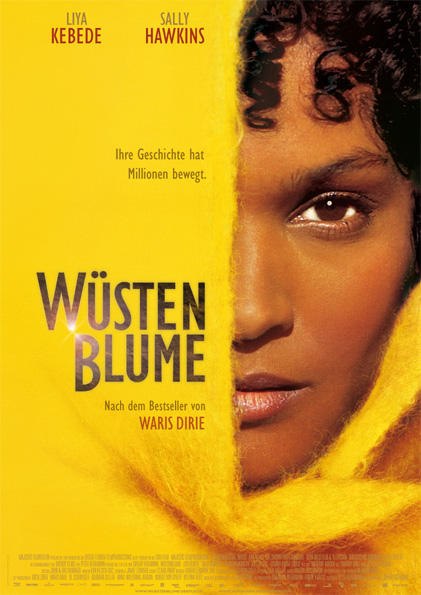
Wüstenblume


For one of my classes (in the 4th form), the students watched the movie Desert Flower about the life of supermodel Waris Dirie - based on Dirie's autobiography.

the REAL Waris Dirie
One word: AMAZING! This woman is an inspiration. The child of Sudanese goat herders, she was a victim of female circumcision (FGM - Female Genital Mutilation) at the age of 5, ran away from home at 13 because she was being forced into marriage to a man old enough to be her grandfather, and eventually ended up in London and was discovered by a photographer while working in a McDonald's. She became a model, and is currently a UN special ambassador to Africa. She has written five books, including her autobiography (also Dessert Flower) and begun the Waris Dirie Foundation which campaigns against FGM.
The film itself is in English, though it was produced in Germany, and Waris Dirie currently lives in Vienna. SO, you can imagine that it was much more successful here than in the US. A bit...shall I say chick-flick-y? And, um, more graphic than I can typically handle - I am really sensitive to violence. Which is a nice way of saying that I'm a big wimp. I had to fast forward through the genital mutilation scene. 

But its saving grace (aside from the powerful story itself, of course) is that she did not end up with the hot guy at the end (THANK YOU!! A WOMAN'S LIFE IS NOT INCOMPLETE BECAUSE SHE DOES NOT HAVE A HUSBAND!!!!!) although she does get married to this creepy janitor to become a legal British resident. She later divorces him when she gets her permanent residency card.

Also, the completely gorgeous Liya Kebede plays Waris - she is actually Ethiopian, however. Not Sudanese. Does that make a difference in the scheme of things? Perhaps to the purists among us. Also, you may not believe me, but I knew she was Ethiopian from her accent. Like the time in Ottawa where I just knew the desk clerk was Albanian. I could tell from his accent. I am very sensitive to speech patterns.

Another excellent (but also graphic - you've been warned) film is the African-produced Moolaadé, which also deals with FGM and give a very real cultural perspective, and sheds light on this important women's rights issue. Mooladé is less, um...professional than what an American audience is used to in a feature film, but don't let that stop you! 

I am to present a lesson on the film in one week...this is going to be interesting! The class is ALL girls, so I'm hoping they will have lots and lots and lots to say.